
Making sense of organoids
Some early thoughts

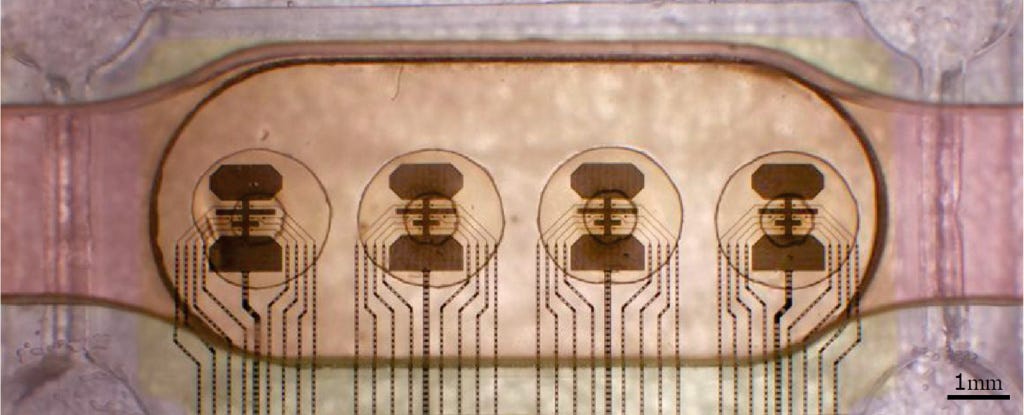
Biology is complex and non-deterministic. Messing with a small part of one metabolic pathway in the liver can affect something else in the body entirely in completely unexpected ways. This makes it really difficult to develop the right cures, therapies, and drugs to treat various ailments. There’s an argument to be made that the process today looks more like wishful trial-and-error than systematic discovery and development. Infusing AI at every step of the drug discovery/ development process is an attempt at rational drug design.
For context, the lifecycle of drugs in can be broken down into four key areas:
1. Drug Discovery. Scientists identify potential therapeutic compounds by studying disease mechanisms, screening chemical libraries, or using AI to predict promising molecules. This is where large datasets, computational biology, and AI-driven target identification play a central role in narrowing billions of molecules down to a few viable candidates.
2. Drug Development (Pre-Clinical). Promising compounds are tested in cells and animal models to evaluate toxicity, absorption, and biological effect before human trials. Organoids increasingly replace or complement these models by offering human-relevant miniature tissues that capture complex organ behavior far better than 2D cell cultures or animal systems.
3. Clinical Trials. Drugs are tested in humans to assess safety in Phase I, efficacy and dosing in Phase II, and large-scale effectiveness across diverse populations in Phase III. Data from organoid models can help refine dosing and predict side effects early, potentially reducing costly failures later in this stage.
4. Commercialization. Following successful trials, drugs are submitted for regulatory approval, then manufactured, marketed, and distributed.
This is a really long process that usually takes more than a decade. The rate of new drugs that are being brought to market has steadily and reliably been falling–a phenomenon called Eroom’s Law (Moore’s Law spelt backwards). Relatedly, the cost of drug development is also increasing–it is massively expensive for pharma companies to discover new molecules, go through the pre-clinical development process, and then increasingly fail in Phase II clinical trials.
In April 2025, the FDA announced plans to phase out animal testing requirements for monoclonal antibodies (which are just lab-produced proteins that mimic the body’s natural antibodies) and other drugs. Instead, the FDA wants to focus on “AI-based computational models of toxicity and cell lines and organoid toxicity testing in a laboratory setting.” Simply put, the FDA wants more research and emphasis on virtual cell models and organoids to drive down the cost of drug discovery and development. This is the stated promise of organoids–by making drug development cheaper, we can increase the rate at which we put new drugs through the established pipelines, get more shots on goal, and ultimately have more drugs in the market that treat all manners of ailments and diseases.
An organoid can be strictly defined as anything derived from iPSC cells (Induced Pluripotent Stem Cells). Basically manipulating a bunch of stems cells in labs with bioreactors to grow into what we want them to do.
Key Learnings
After speaking with a bunch of industry experts, a few key themes emerged, each one warranting more exploration.
Which organoids you choose to work on really matters. There’s plenty of options for stomach, intestine, and liver organoids. Immune and neurological systems lack real organoids and this is where we actually need them–animal studies are terrible at providing reliable data there. A researcher also pointed out how she didn’t actually need organoids for the kind of testing she was doing at Novo Nordisk–2D organs on a chip did the job. For a startup, picking the right first organoid to go after is key. There ought to be some market validation from pharma companies and the founder should be able to sell to them.
Scaling organoids production would likely only help in determining toxicity–this isn’t sufficient in addressing current bottlenecks in drug development around efficacy in Phase II trials. What we really need is a reliable way to induce diseased state in organoids to test for efficacy. This is much harder to do.
Growing organoids is really hard. The protocols are very meticulous and lots of testing is required. I’m reminded of how my cousin, who worked in a brain organoids lab at Emory, complained about having to go to the lab every day–including weekends–to “feed” the organoid. Any scalable organoid development process needs to have lab automation as a key feature.
The future of drug discovery + development is organoids working in tandem with in silico models and updating the efficacy of virtual cells models
In summary, here is a non-exhaustive check list of what I would look for in an organoid startup:
Sound reasoning for why that organoid specifically
Ability to induce diseased state in organoid
A way to reliably reduce costs for manufacturing these organoids through lab automation, vertical integration, etc.
Ability to sell to pharma companies and monetize data through in silico models as well
Brain Organoids
Neurological organoids are some of the most complex organoids to build–one biotech VC I spoke with is outright dismissive of them, but perhaps this is the opportunity at hand. When industry insiders become dismissive, it’s time to get curious. It’s not worthwhile to compare brain organoids to the complexity of human brains, but instead to the current standard of therapeutics testing in mice brains. The latter, famously, have very low translational power in neuroscience testing. In other words, predicting drug efficacy for neurological disorders through animal testing in mice is a bit of a lost cause. Even if human brain organoids cannot replicate the whole brain—just relevant subregions—they offer more predictive power than existing mice models.
Brain organoids today represent a small fraction of the organoids market. They’re hard to grow but some labs have managed to grow “whole brain organoids.” My view is that testing on these organoids is purely constrained by the scale and cost at which you can manufacture them with extreme reliability
This recent news from Recursion about how they built a “Microglia Map” of the brain using iPSCs sort of calls into question the necessity of full on brain organoids. There are instances today where we do not need to go through the pain of building organoids to get the data we need. But I do think that emulating the true complexity of regions of the brain in organoids will unlock deeper, more substantial insights that are hard to predict right now. The prize for all of this is a multi-hundred billion dollar industry that treats neurological disorders like Alzheimer’s, Schizophrenia, Autism, and more.
Lastly, and this is a moonshot, organoids can possibly be used for computation one day. A company called Biological Black Box is using neurons to more efficiently train AI models. I can’t speak super intelligently about their approach but it seems that a vertically integrated organoids startup would be a better wedge into this market. If these brain organoids are produced at scale, maybe we can use them to commercialize a whole new paradigm shift in computation (?)
Market cycle opportunity
Biotech is a deeply cyclical industry. In periods of low interest rates and market exuberance, investors chase platform plays–best exemplified by the 2021-22 cycle where direct listings and SPACs of synbio companies like Gingko Bioworks captured the imagination. Such companies invariably failed to live up to the inflated expectations. Monetary conditions tightened and the biotech industry had to take refuge in the cash-flowing familiarity of pure-asset companies. Drugs that reliably printed money, but were increasingly elusive. Today, the market cycle is undervaluing these platform plays. But the opportunity to back incredible founders building the defining biotech platform around a specific niche–like brain organoids–is quite compelling.
Year to date, the XBI (an index of biotech stocks) has outperformed the S&P 500 (23% vs 18% returns). In the face of a losing competition with China, attention is slowly shifting towards these biotech platforms as the next battleground for great power competition. If done right, organoids can be a big part of it.
Special thanks to Maxx Yung for his insights here :)
References and relevant readings
Grand challenges in organoid and organ-on-a-chip technologies
From Animal Models to Organoids: A New Era of Drug Discovery